Full Text Alternative: “Staying Healthy Together”
Overview
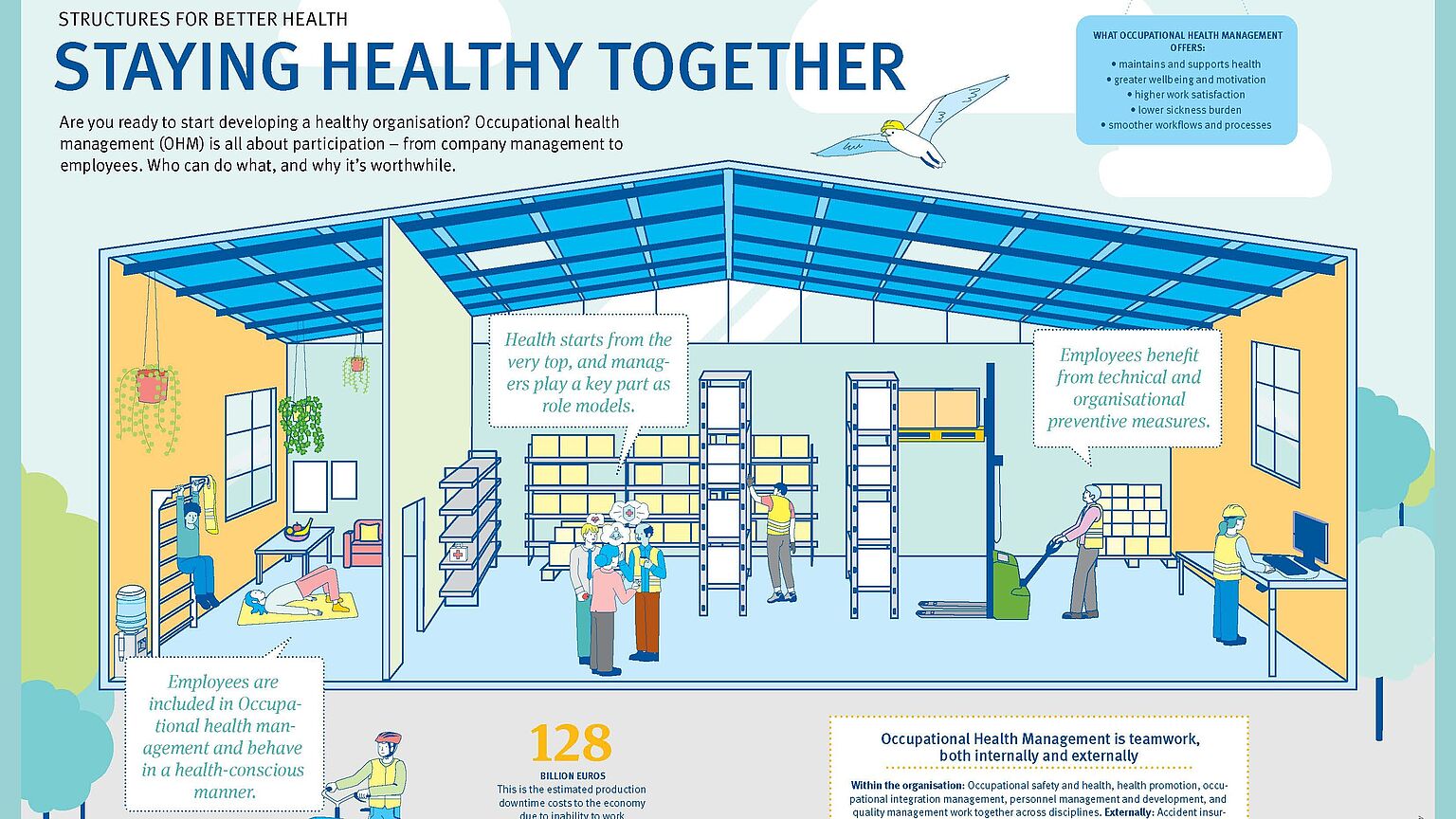
This infographic explains the concept of Occupational Health Management (OHM) and how shared responsibility within an organisation promotes employee health, wellbeing, and efficient work processes. It combines written information with an illustration of a warehouse‑style workplace where preventive health measures are visibly integrated into daily work.
Header and Source Information
Logo and Organisation:
BGHW – Berufsgenossenschaft Handel und Warenlogistik (German Social Accident Insurance Institution for the Trade and Retail Logistics Sector)
Introductory Heading:
Structures for better health
Main Title:
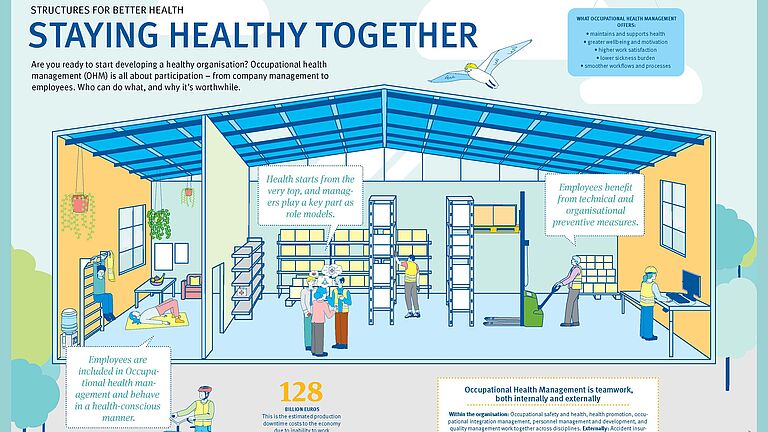
Staying Healthy Together
Introductory Text
The infographic asks the reader whether they are ready to begin developing a healthy organisation. It explains that occupational health management is based on participation at all levels, from company management to employees. The message stresses defining responsibilities clearly and understanding why health management is worthwhile.
Key Benefits of Occupational Health Management
A highlighted information box lists what occupational health management offers:
- Maintains and supports employee health
- Leads to greater wellbeing and motivation
- Increases job satisfaction
- Reduces sickness‑related workload and absence
- Enables smoother workflows and processes
Central Illustration: Workplace Environment
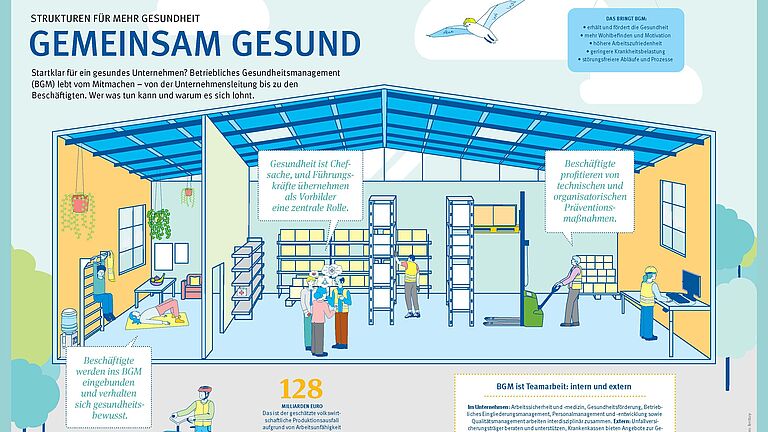
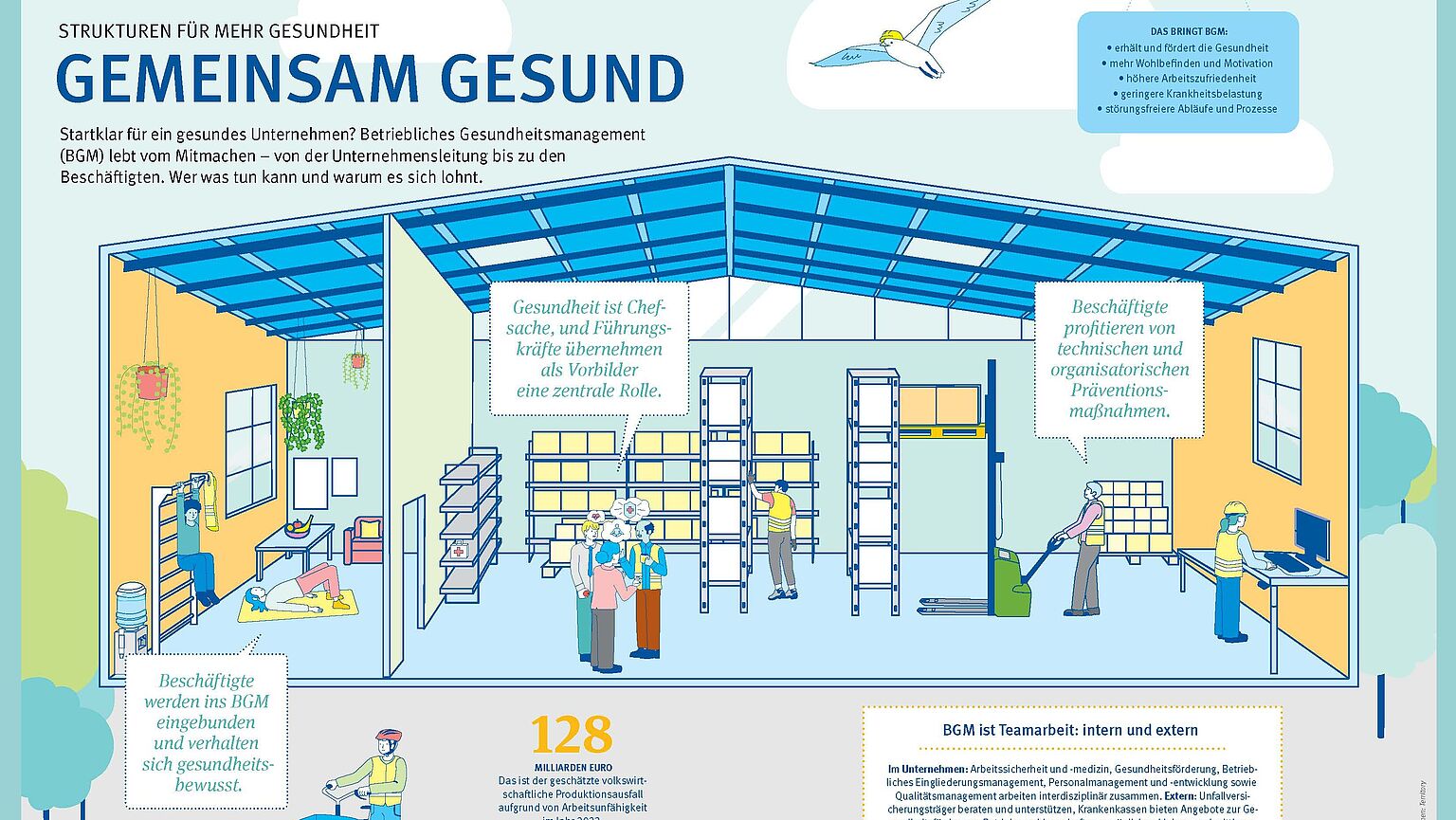
The main illustration shows a large, open warehouse or logistics workspace with shelving units, storage areas, workstations, and clear walkways. Multiple people are shown performing everyday tasks, demonstrating how occupational health management can be embedded into routine operations.
Preventive Health in Practice
- A designated area shows physical activity and stretching, suggesting movement breaks or workplace exercise.
- Storage shelves are organised and accessible, indicating ergonomic workplace design.
- Technical equipment, such as lifting aids and a pallet truck, illustrates mechanical support to reduce physical strain.
- Workstations with screens and desks suggest adapted and organised office‑style work areas.
- A cleaning activity demonstrates order, safety, and preventive maintenance.
Plants and natural elements are included in the workspace, visually reinforcing wellbeing and a healthy working atmosphere.
Statements within the Illustration
Several text boxes within the illustration highlight core principles of occupational health management:
- Leadership Responsibility
“Health starts from the very top, and managers play a key part as role models.” - Employee Participation
“Employees are included in Occupational Health Management and behave in a health‑conscious manner.” - Preventive Measures
“Employees benefit from technical and organisational preventive measures.”
These statements emphasise shared responsibility, leadership commitment, and structured prevention.
Economic Impact of Occupational Illness
A prominent numerical highlight states:
128 billion euros
This is identified as the estimated production downtime cost to the economy due to the inability to work in 2023.
Source:
Federal Institute for Occupational Safety and Health
This figure underscores the economic importance of effective occupational health management.
Teamwork and Organisational Structure
A concluding text box explains that:
Occupational Health Management is teamwork, both internally and externally.
Internal Cooperation Includes:
- Occupational safety and health
- Workplace health promotion
- Occupational integration management
- Human resources management and development
- Quality management
All internal areas work together across disciplines.
External Support Includes:
- Accident insurance institutions
- Agencies advising and supporting health insurance providers
- Local business networks
- Work councils spanning multiple companies
- Small and medium‑sized enterprises working together
These partners collaborate to develop and implement occupational health management plans.
Overall Message
The infographic communicates that healthy work environments are achieved through structure, prevention, participation, and cooperation. When management, employees, and external partners work together, organisations benefit socially, economically, and operationally.