Full-Text Alternative – Infographic “Safe on the Roof”
Short Description (Alt Text)
Infographic about occupational safety on roofs: it shows hazards, protective measures such as collective and personal protection, as well as requirements for occupational health screening, rescue procedures, and organization.
Detailed Description
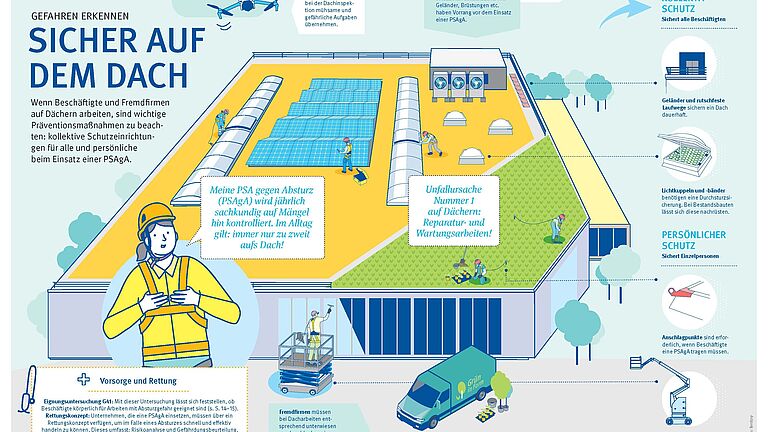
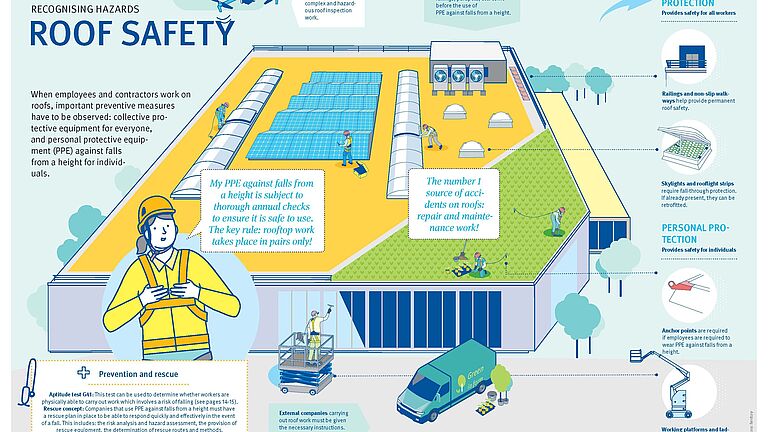
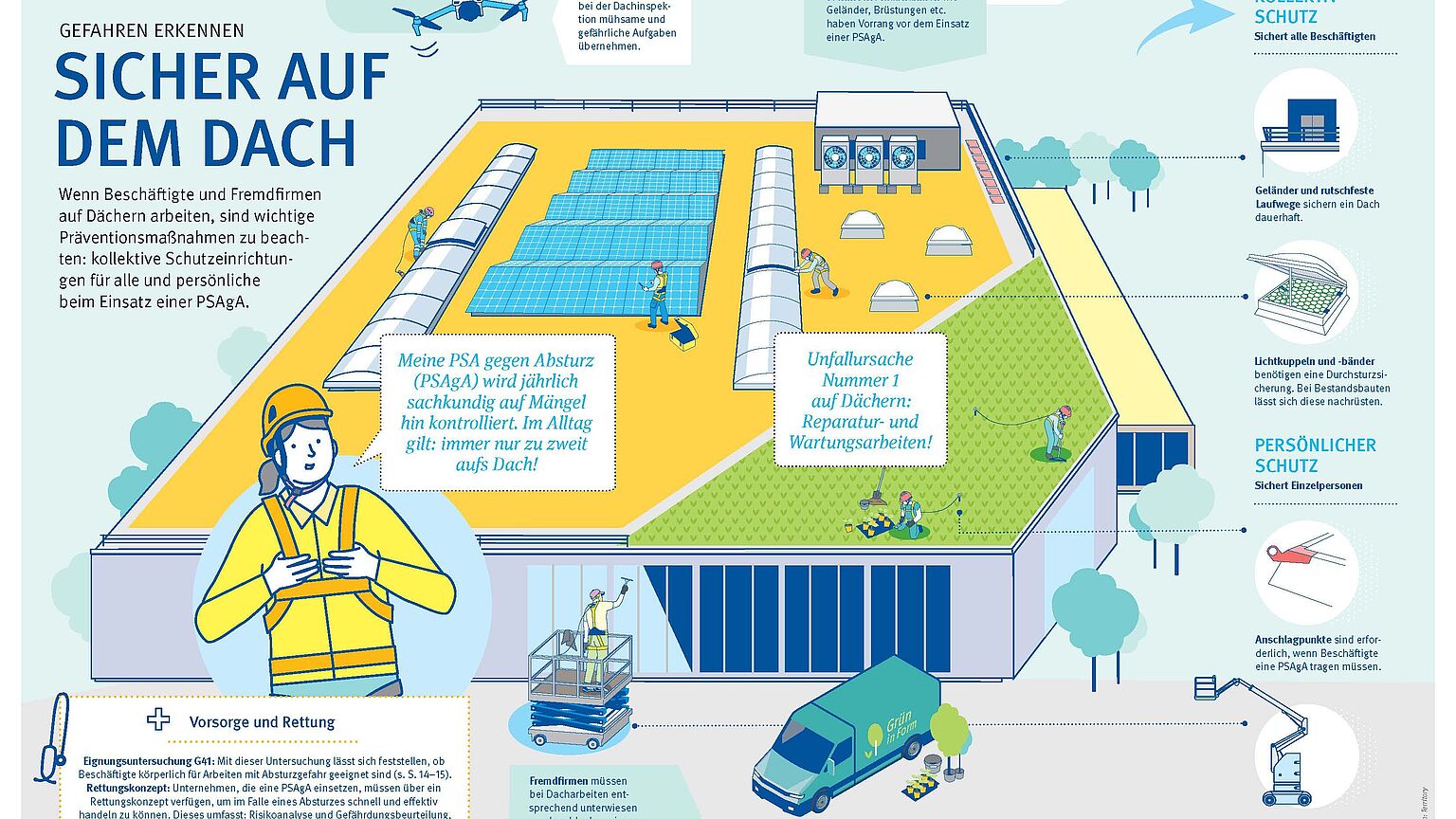
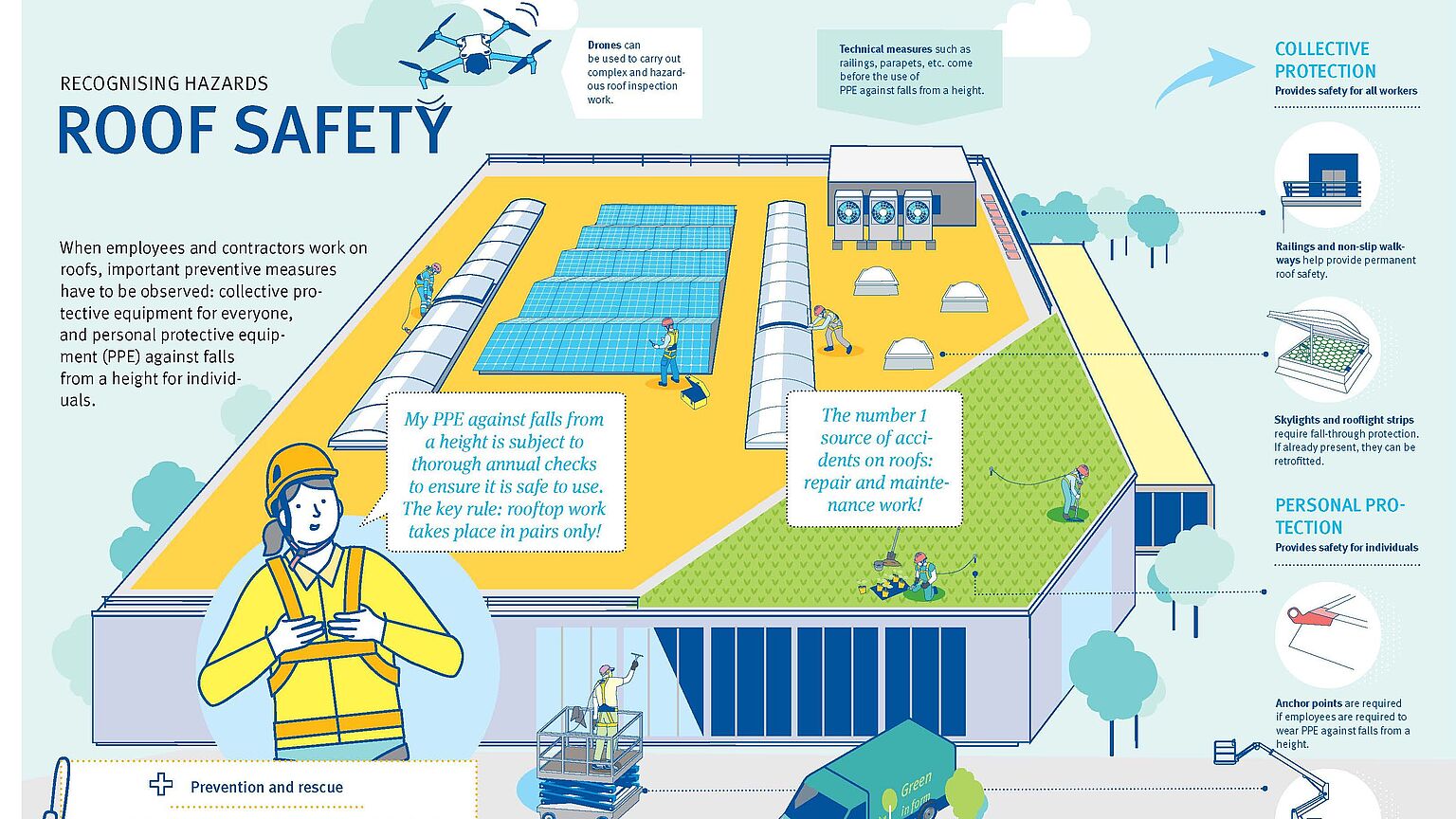
The infographic shows a large building with a flat roof in a perspective view. Several people are working on the roof. The illustration highlights hazards associated with roof work as well as suitable protective measures.
At the top left is the title “Safe on the Roof” with the note “Recognizing Hazards.” An introductory text explains that important preventive measures must be observed when employees and external contractors work on roofs: collective protective systems for everyone and personal protective measures when using personal fall protection equipment.
Several work situations are depicted on the roof:
Employees move along rooflights and solar panels, one person is working in a kneeling position, and another is using tools. A drone is flying above the roof and is presented as support for inspection tasks.
A central statement reads:
Technical measures such as guardrails and parapets take priority over the use of personal protective equipment.
On the right-hand side, two types of protection are distinguished:
Collective protection safeguards all employees. Examples include guardrails, slip-resistant walkways, and fall-through protection for skylights and rooflights.
Personal protection safeguards individual persons. This includes personal fall protection equipment and anchor points.
Another statement explains:
Personal fall protection equipment must be inspected regularly. In day-to-day work, roof work should, whenever possible, not be carried out alone. People should always go onto the roof in pairs.
The lower section addresses occupational health screening and rescue procedures:
The G41 occupational health examination assesses physical suitability for work involving fall hazards. Companies must have a rescue concept that includes risk assessment, rescue equipment, rescue routes, training, and emergency planning.
Additional notes:
External contractors must receive instruction and be monitored regularly.
Elevating work platforms and ladders must be integrated into the safety concept.
A highlighted piece of information states:
The most common causes of accidents on roofs are repair and maintenance work.